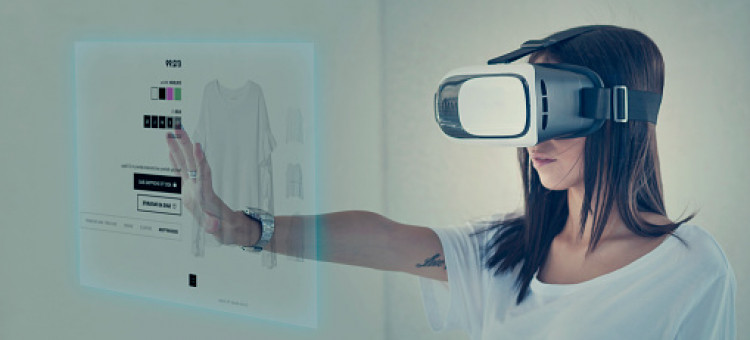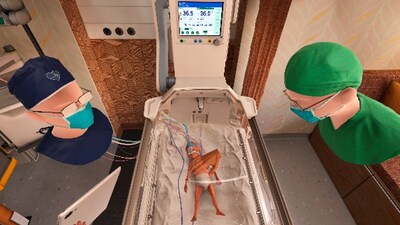


Two researchers from the University of Saskatchewan will be using virtual reality to work in partnership with Indigenous students in the world of health science education.
Dr. Soo Kim and Stacey Lovo recently received a two-year, $250,000 grant from the New Frontiers in Research Fund. The pair will partner with the students and leadership at Whitecap Dakota First Nation to develop and implement the virtual reality teaching modules.
The pair spent time with the young students, learning what they found is helpful and unhelpful with respect to their health and wellness, what they hope to learn about the brain and mental health, and what method of learning would be most engaging.
Lovo says once the virtual resources are finalized, the students will be able to access two projects on stand-alone virtual reality headsets. Project one is a 3D interactive model of the brain that will allow students to explore neuroanatomy and concepts of mental health.
“They might pick a piece off of the brain and learn what it does, and learn what health consequences might happen from say, exercising or being on the land, sitting with their family enjoying a meal.”
The second project is a virtual version of the School of Rehabilitation Science, where students can meet the faculty, see the study environment, and experience the university atmosphere without having to make the trip to Saskatoon. Kim explains that “There would be an option for students to put on the virtual reality headset, see the school of rehabilitation science, to meet some of the Indigenous students and current students and see what their experiences have been.” This way, students can determine if they can see themselves in a health sciences profession and prepare accordingly.
The researchers aim to abide by the wishes of the students and community members and prioritize Indigenous knowledge by including historical, language, and cultural components. Lovo says the current education model for health science learning in Saskatchewan is a very westernized model. “There is not an ability for an Indigenous student to learn about the brain from an Indigenous lens, specifically.” This project aims to do exactly that.
Kim added that “It can be developed and built in a way that is culturally appropriate that really works with their values and things within their community that they really want to see emphasized.”
Kim says it’s the results of the projects are what excites them the most. “In particular, mental health and wellness for Indigenous youth, and the future of Indigenous youth, if they choose and are interested in health sciences.”
Lovo says eventually, the pair hopes to make this information available to Indigenous students across the province. Kim echoed her remarks, stating that “Once it’s developed, it can be incorporated into the curriculum. It can be used at the different schools in different ways to really address youth mental health and wellness. The other part that excites us…is the possibility of having more Indigenous youth interested in pursuing health science professions.” She adds that the informative and educational tool doubles as an act of reconciliation through education.
Quelle: