
According to a Breaking Defense report, the U.S. Army has chosen defense startups Anduril and Rivet to compete against one another in its revamped Integrated Visual Augmentation System (IVAS) project, now called the Soldier Borne Mission Command (SBMC), which is slated to integrate AR headsets into combat roles.
Rivet, partly funded by Palantir and led by former Microsoft IVAS lead David Marra, announced last week it’s secured a $195 million, 18-month contract to prototype and produce 470 “production representative” devices in the new SBMC program.
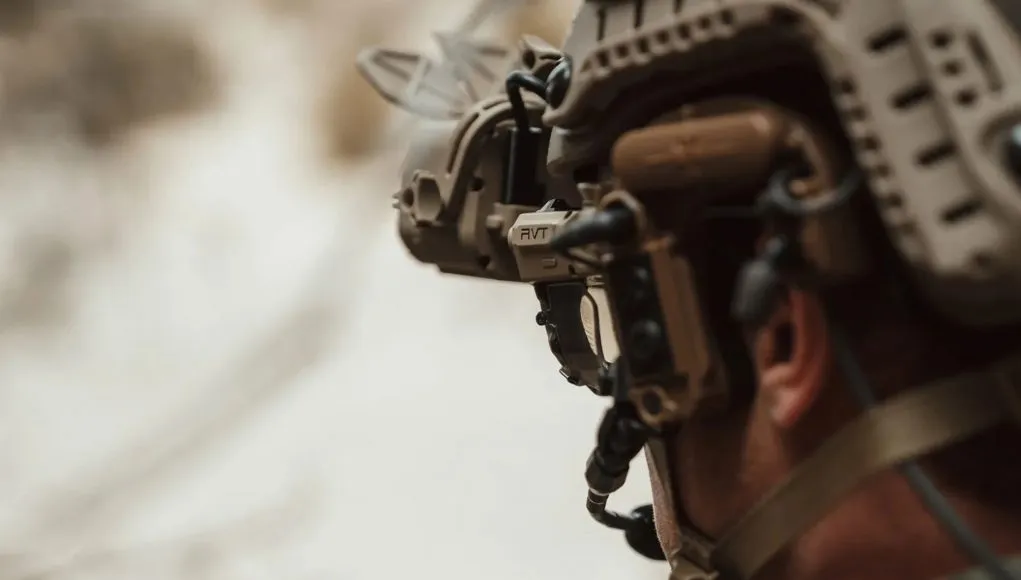
At present, the company produces an XR platform, called Rivet Hard Spec, which is designed for frontline professionals in defense and industrial sectors. Information is thin on the ground surrounding Hard Spec, and whether the system is playing a central role in the SBMC bid.
Rivet notes however the company will “help the Army field [SBMC] to the Infantry through rigorous iteration with Soldiers, ensuring an adaptable and extensible platform for lethality and overmatch against evolving threats.”

While Rivet has confirmed it’s secured the $195 million contract for the batch of XR prototypes, Rivet still faces strong competition from a possible Anduril + Meta partnership. In May, Anduril and Meta announced the companies were aiming to make “the world’s best AR and VR systems for the US military.”
Anduril CEO Palmer Luckey, known for creating Oculus Rift and selling the company to Meta (then Facebook) in 2014 for more than $2 billion, teased a military-focused XR device called Eagle Eye, which is said to serve as central component in their SBMC bid.
At the time of this writing, Anduril has not publicly confirmed a contract with the U.S. Army, however Breaking Defense reports Army sources have confirmed their selection alongside Rivet.
The SBMC recompete follows years of challenges with IVAS, which was initially awarded to Microsoft in 2018 to produce a combat-ready AR headset based on HoloLens 2 capable of fulfilling the $22 billion, 10-year production deal.
Microsoft’s IVAS ultimately suffered multiple challenges in the following years, including poor field testing results due to comfort, reliability and ruggedness issues, ultimately leading to Anduril taking over development of IVAS’ software earlier this year.
At the time, it was seen as a way of potentially giving Luckey’s defense company valuable time to work with Army leaders in preparation to recompete for the new, revamped SBMC program.
Quelle:
Foto: Rivet Hard Spec | Image courtesy Rivet