
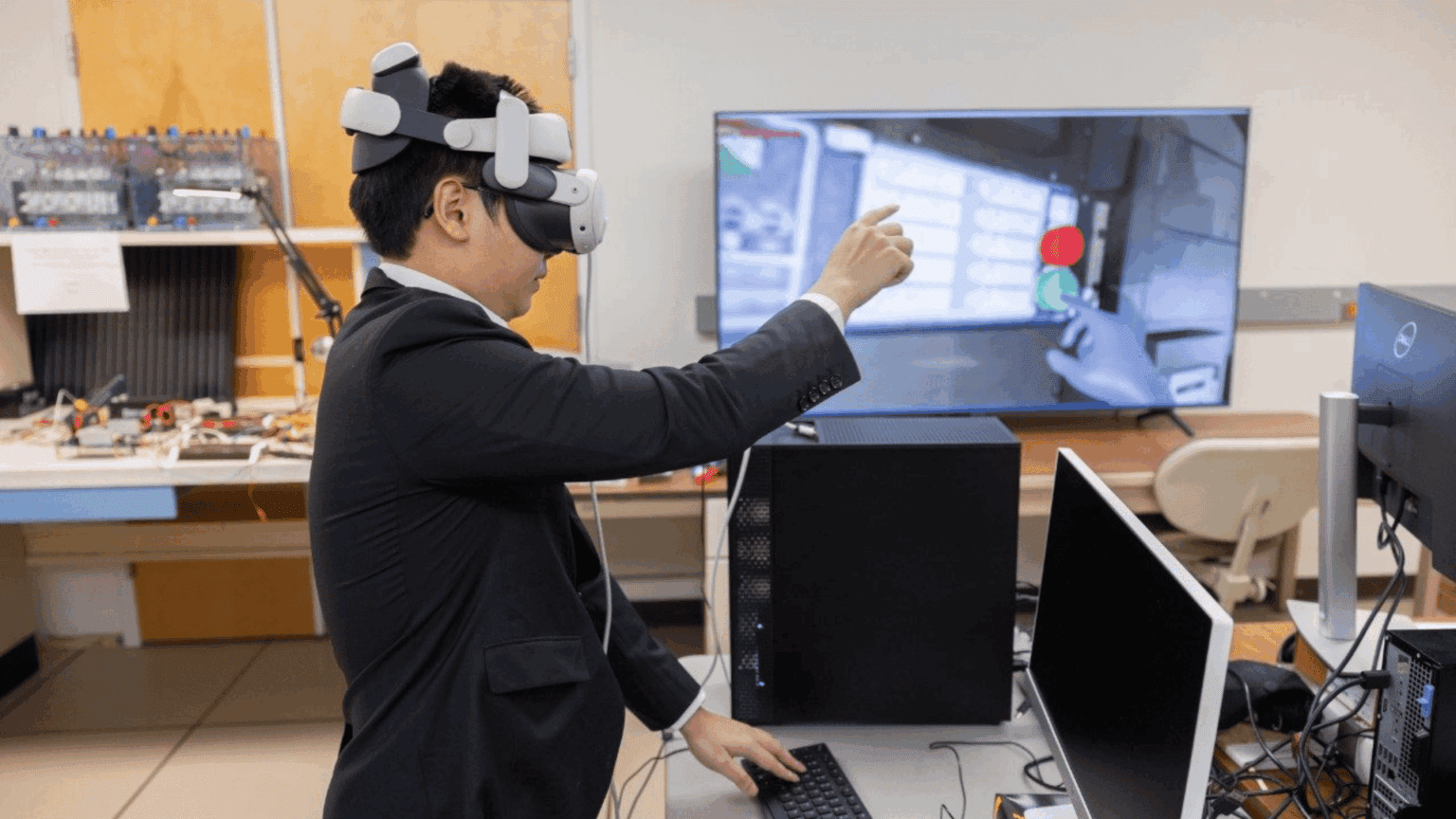
Virtual reality and digital twin technology allows for workplace mistakes while training without repercussions.
Researchers at Virginia Tech want to “overhaul” workforce training with virtual reality and digital twin technology. In the real world, hands-on training and learning from mistakes are crucial. However, real-life mistakes impact businesses, workers, and products.
“We’re developing a set of tools so that a trainee can interact with the digital twin of a power system and see the impacts of turning a knob or opening a switch on the grid operations and performance,” said Ali Mehrizi-Sani, professor in the Bradley Department of Electrical and Computer Engineering and director of Virginia Tech’s Power and Energy Center. “There has been a host of modern technologies implemented in the power system that can easily overwhelm the existing workforce, especially as many were trained when some of the new tech wasn’t common.”
Digital Twin and VR Training
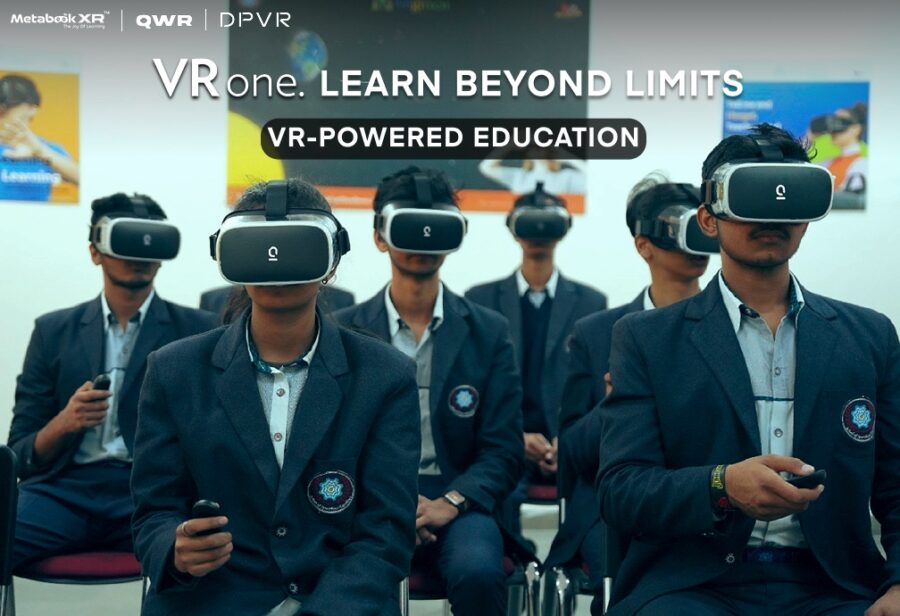
Mehrizi-Sani’s research team is building a virtual reality system that links to a digital twin of a local electric substation. Using the custom headset, combining VR and digital twin technology, trainees can interact with the digital substation as if they were physically there. “For instance, they could throw a switch and see the effects on the whole power system, creating a powerful training experience.”
This allows for mistakes during a training session without repercussions, creating an immersive experience with hands-on learning.
“With virtual training, we exponentially reduce restrictions and increase flexibility,” said Nam Nguyen ’88, executive director of Energy and Utilities at Virginia Tech. “There are more opportunities to virtually walk around the substation. Trainees can make mistakes, and we can even create outage issues.”Nguyen added, “It allows our new linemen to go through the process of identifying and problem solving, all without affecting the real system or people.”Researchers see this innovation as a proof of concept for the future of education or training in the workplace because it has no “real-world impact.” Multiple occupations, such as surgeons, pilots, astronauts, and firefighters, use similar technology. These are roles where mistakes while training could result in critical problems.“In today’s world, where activities compete for attention, it’s important to keep our players, trainers, or audience for longer, more meaningful periods,” said Mehrizi-Sani. On a lighter note, Mehrizi-Sani added, “VR is our way of doing this, providing an immersive experience with real graphics and real, lifelike interactions. Plus, it’s more fun this way.”
Quelle:
Foto: Student Nguyen Khoa Nguyen demonstrates the virtual reality training system; Photo: Ben Murphy/Virginia Tech