
The regional carrier is the first U.S. airline to receive FAA approval to incorporate VR software into its training programs.
Texas-based Envoy Air is breaking new ground with a high-tech system for training its pilots.
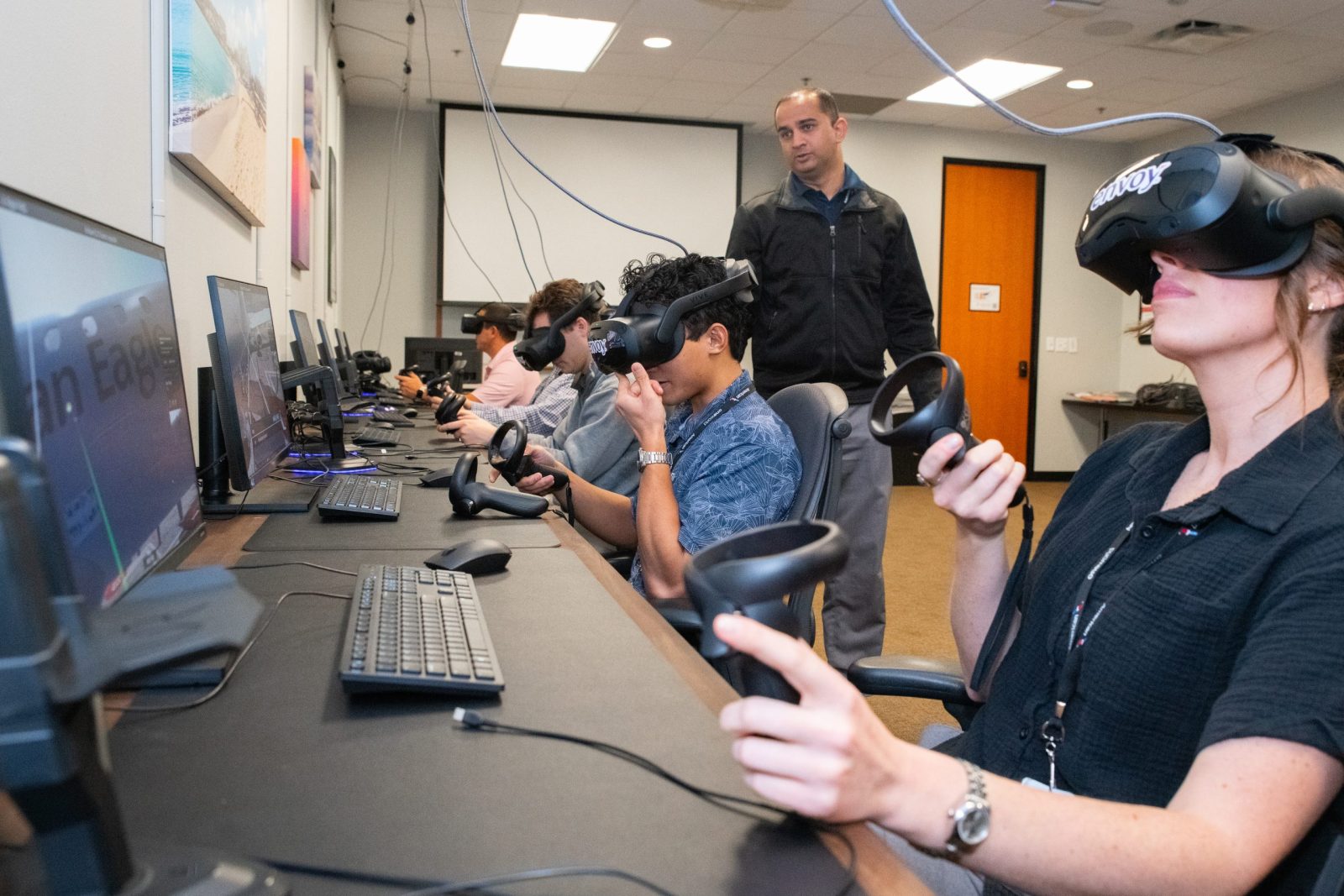
The company is the first Part 121 carrier in the U.S. to receive Federal Aviation Administration approval to incorporate virtual reality into its training programs. At Envoy’s headquarters outside Dallas, classes of pilots will soon be using VR headsets and joysticks to practice different aspects of their job without setting foot on or near an actual aircraft. The system is meant to be used alongside other pilot training tools, including flight simulators.
Captain Allen Hill, director of flight training at Envoy, said pilots who have already worked with the program give it high marks.
“Both junior and senior aviators take to it very well,” he said. “It helps them gain proficiency in a shorter period of time.”
The company spent several years looking for a VR vendor before landing on Cole Engineering Services in Orlando, Florida. The partners worked together to create an Envoy-specific mixed-reality program, then ran test classes to see how potential trainees would react.
“Most of the kids that are used to online gaming, if you explain it, they immediately understand and can begin to maneuver in the environment pretty quickly,” Hill said. “The older aviators maybe take about 10 to 15 minutes to get used to it and then they start to move around pretty quickly too.”
Envoy is currently training the instructors on how to use and teach the software. Once that process is completed, classes of 24 trainees each will begin.
Building Skills
The VR module helps replicate the experience of a preflight “walkaround,” in which pilots visually inspect an aircraft prior to departure. The simulated environment allows pilots to examine and call out potential problems or points of concern without looking at any real damage. The software also lets users run through flight deck procedures and checklists as if they were readying for a real flight.
Aircraft maintenance technicians will also use the program.. One course allows them to simulate changing an airplane tire.
And while the headsets and joysticks will stay at the carrier’s headquarters, trainees will be able to use a 2-D version of the program on their personal devices, allowing them to keep practicing and building their skillset anywhere at their own convenience.
Asked about future applications for VR in training and elsewhere, Hill said the company is keeping an open mind and may find new uses for the technology.
“I think we’re only limited by our imagination,” he said.
Virtual reality has been making significant inroads in the aviation sector in recent years. In 2024 the FAA certified a VR flight simulator made by Loft Dynamics, allowing helicopter pilots to use it to train and receive credit toward official pilot ratings. Alaska Airlines is now adopting this technology for its 737 fleet.
Quelle:
Foto: Trainees experience Envoy’s VR training program. (Photo: Envoy)
https://airlinegeeks.com/2025/04/29/envoy-using-virtual-reality-to-help-train-its-pilots/#