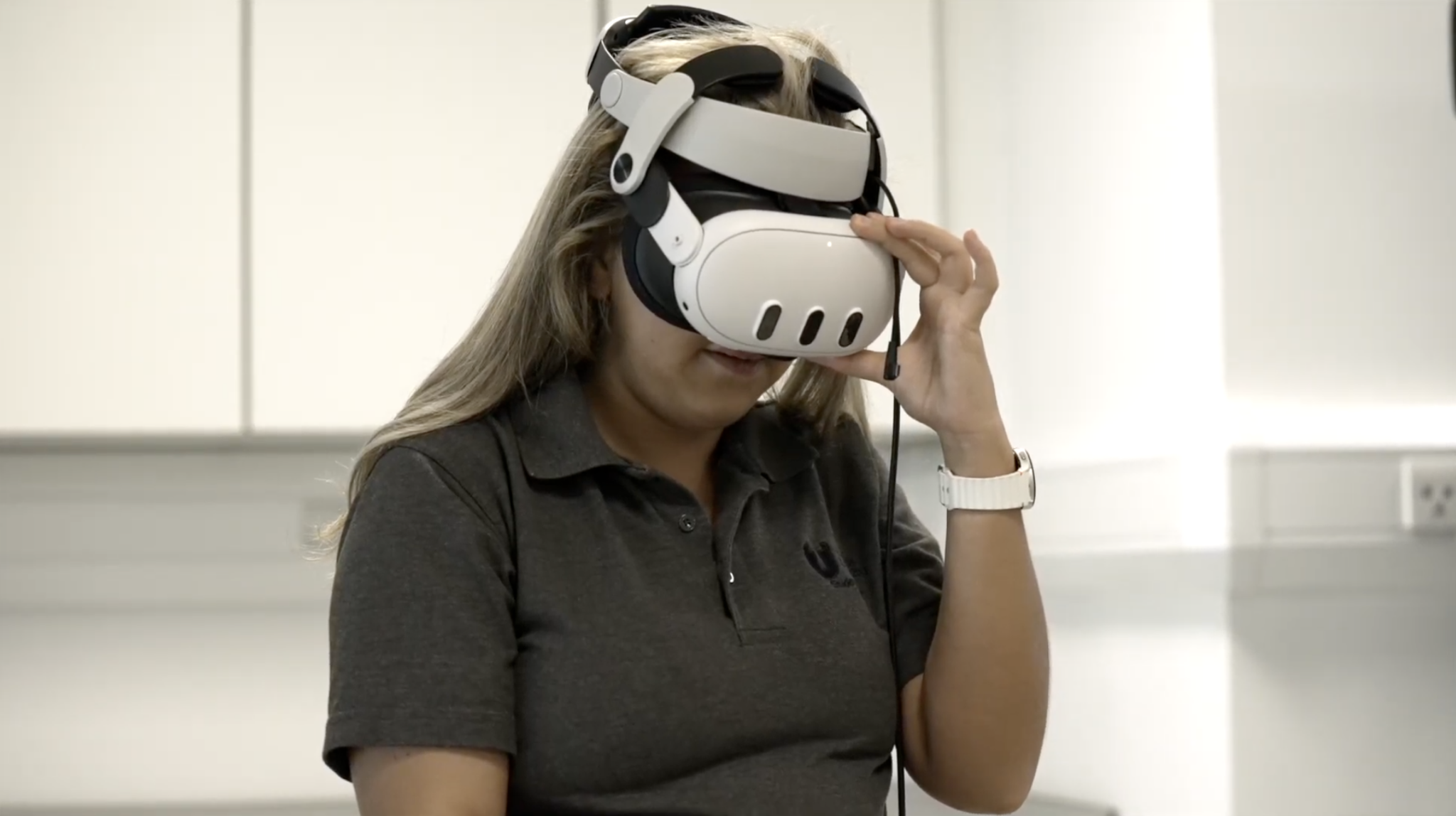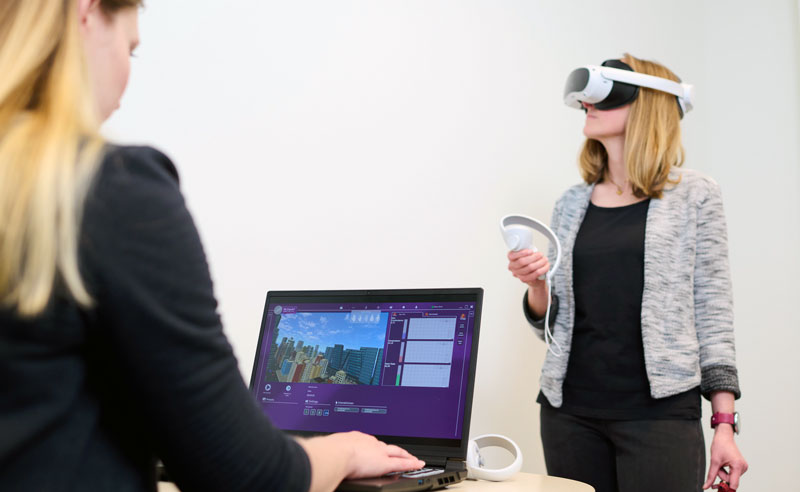


Virtual content in augmented reality (AR) applications can be tailored to a designer’s specifications. However, real-world environments are challenging to control precisely or replicate fully. Consequently, prototyping AR applications for specific environments is often difficult. One potential solution is employing mixed reality (MR) to simulate an AR system, enabling controlled experiments. Nevertheless, the effectiveness of using MR to simulate AR office work remains underexplored. In this paper, we report the results of a user study (N = 40) that investigated the impact of an MR simulation of an AR office on participants‘ task performance and cognitive workload (CWL). Participants completed several office tasks in both an AR scene featuring a virtual monitor and an MR-simulated AR scene. During these tasks, CWL was measured using electroencephalography (EEG) and a subjective questionnaire. The results show that the performance of the pass-through window is a major constraint on the effectiveness of the MR simulation office. Finally, we discuss the study’s limitations and directions for future research.
Quelle: