
“When I put on a VR headset, I still notice that I am floating there—that I exist independently of the information I experience. But the very best moment is always when I take off the headset. In the nineteen-eighties, we used to try to sneak flowers or pretty crystals in front of people before they would take off their headsets; it was a great joy to see their expressions as they experienced awe.”
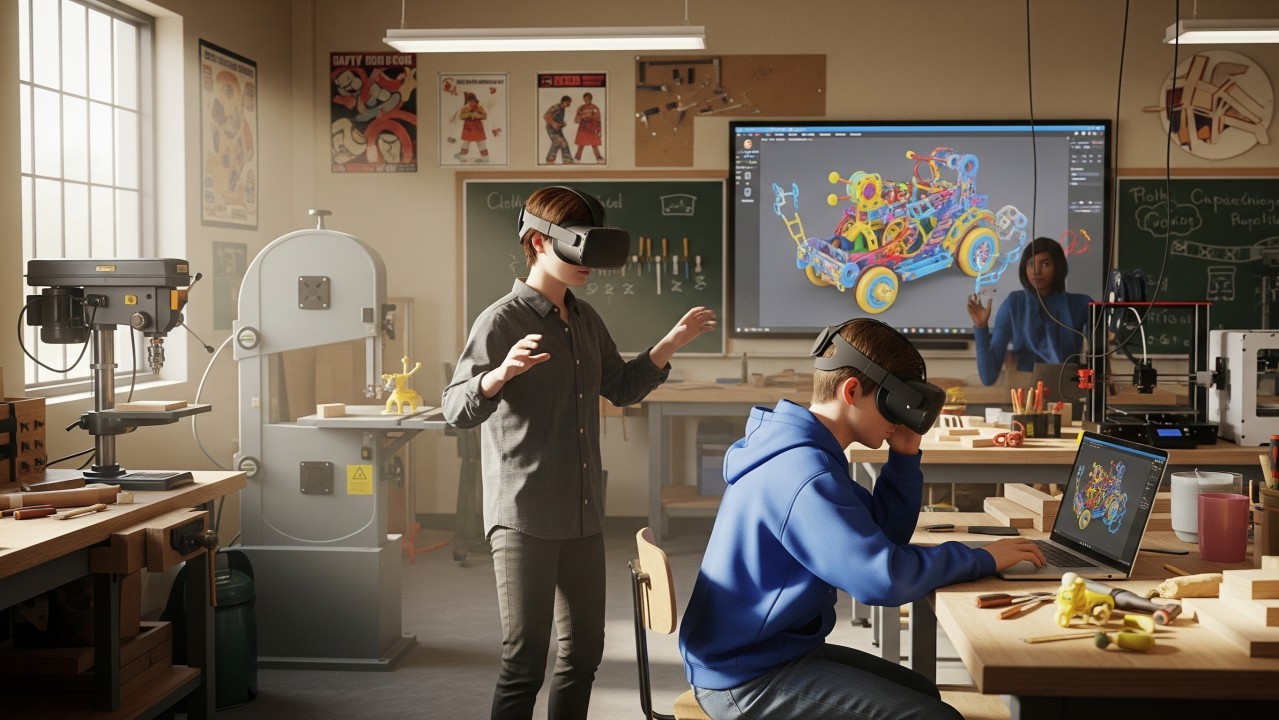
In the past, virtual reality technology was primarily used in gaming—a powerful, almost drug-like experience that immerses users beyond reality. While you can’t touch a polar bear in real life, you can do so simply by wearing a VR headset, and even lift objects weighing thousands of pounds using just two fingers. In a sense, it aligns seamlessly with human perception yet far surpasses our real-world limitations. Today, VR technology is increasingly applied to practical fields such as education, healthcare, aviation, and automotive industry. For instance, precise pilot training or baggage-handling practice for airline employees can be effectively conducted through VR simulations.
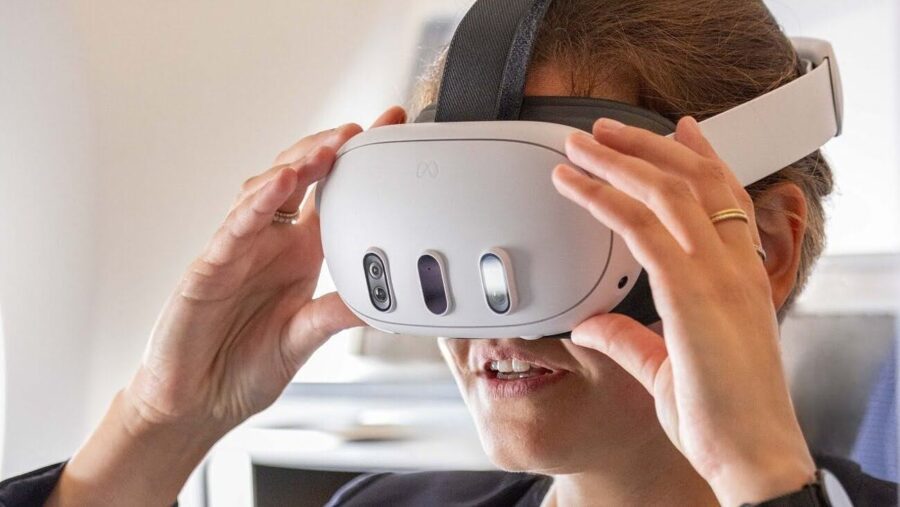
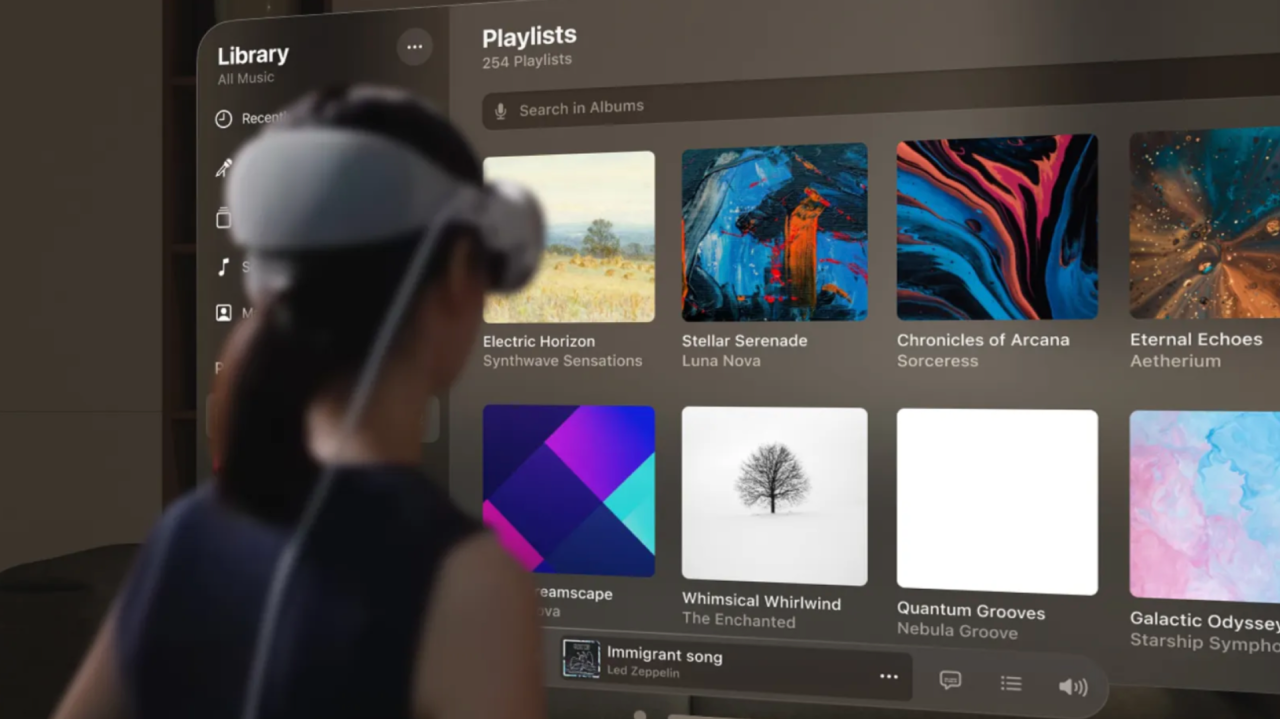
But is being practical truly our top priority? As designers, how should we perceive the evolution of virtual reality technology? Among so many stakeholders—investors, VR entrepreneurs, programmers, and modelers—what role do designers play in this technological revolution? When I worked at a company developing virtual reality products, I often reflected on my value during our daily stand-up meetings. Every product test involved putting on a headset: visually, I saw streams flowing; audibly, I heard running water and birds chirping. I was both deep in a forest and quietly sitting at my desk. This brought me back to a frequently mentioned term—experience. After Apple introduced the Apple Vision Pro, they encouraged users to wear the headset in public spaces—on buses, at airports—to „make it weird.“ Even if others found the bulky headset strange, wearing it was almost a badge of honor, marking the wearer as a VR pioneer. However, due to its weight and size, using it during a long meeting or watching an entire movie would likely not be a pleasant experience. Today, companies continue striving to reduce the size of VR headsets, aiming eventually for something as unobtrusive as ordinary glasses. Perhaps these companies hope to eliminate the inconveniences of reality that intrude upon virtual experiences. But this leads us to a fundamental question: What truly matters most? I often ask myself: When we’re designing, what exactly are we designing? To create an increasingly immersive experience without interruption, we add more ambient sounds and interactions that mirror reality—for instance, pushing a joystick forward moves a virtual boat ahead, aligning perfectly with our real-world expectations. Great—but what next?
We can’t deny the incredible value VR offers someone who lost an arm in an accident; when they put on a headset, they see and even use that missing limb again—a profoundly uplifting experience. But consider another scenario: your child dreams of seeing the Northern Lights in Alaska, and you instead give them a kid-sized VR headset, allowing them to witness the aurora from home. Would your child truly feel joy from this substitute? What we tend to overlook is that the real world, flawed yet beautiful, comes with its own limitations and rules. It is precisely because certain things are challenging or seemingly out of reach that everything we can achieve becomes meaningful. As Jaron Lanier mentioned in The New Yorker, „I still experience V.R. as a beacon of humanism.“ So it is with other technologies.
Quelle:
https://www.linkedin.com/pulse/how-virtual-reality-reminds-us-experience-really-exists-sngnc